Why Regulated Industries Choose CryptoESIGN CFR 21

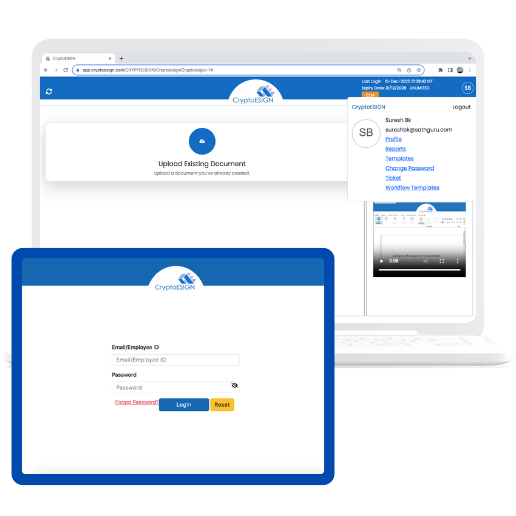
CryptoESIGN regulated access control and signer authentication interface

Regulated User Identity & Controlled Access

CryptoESIGN enforces strong user identity controls:

  • Individually unique accounts (cannot be shared or reassigned)
  • Multi-factor authentication (mandatory 2FA)
  • Password complexity + expiry + lockout
  • Validated signer onboarding process

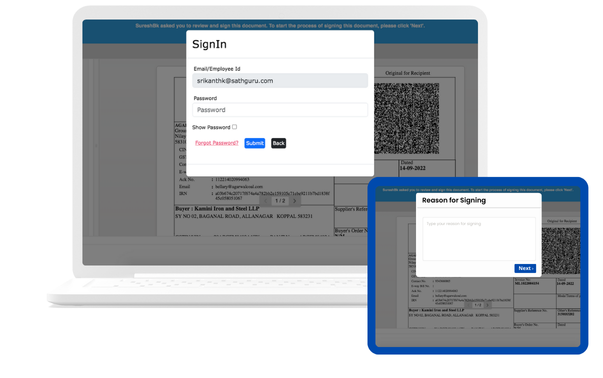
Mandatory Signature Reason + Re-Authentication

Every signer must:

  • State the purpose/reason for the signature

    The signer must clearly mention why they are signing, ensuring legal intent and accountability.

  • Re-authenticate with password during signing

    The signer must enter their password again at the time of signing to confirm identity and prevent unauthorized or accidental use.


Ensures intentional approvals for QA, SOP, Batch Records, CAPA, and Deviations.

CryptoESIGN interface requiring signature reason and password confirmation for FDA compliance

Tamper-Proof Signature Manifestation

Every digital signature is secure, traceable, and audit-ready.

Name of the signer

Identifies the authorized person who signs the document, ensuring accountability and traceability.

UTC timestamp

Records the exact time of signing in a universal format (UTC), enabling global, time-zone-independent audits.

IP address

Captures the signer’s network source to validate device location and authenticity of the signing action.

Email ID

Links the signature to a verified, unique user identity, preventing impersonation or shared access.

Reason for signing

Specifies why the document was signed (e.g., approval, consent, review), providing legal and regulatory justification.

Signature ID & Document Linkage

Generates a cryptographic ID that permanently ties the signature to the exact document, preventing tampering, deletion, or reuse.

21 CFR Part 11: Where Every Digital Signature Meets Regulation

CryptoESIGN creates a permanent, non-deletable record of every action, capturing identity, timestamp, and reason- and exports it in XML format

Each signature is permanently linked to the specific document via a unique cryptographic ID that captures the signer, timestamp, and reason.

CryptoESIGN captures FDA-grade electronic consent with Verified identity, Explicit acceptance & intent, Tamper-proof audit, Version control, Record locking, Copy access to the user. Perfect for clinical eConsent, training compliance, HR onboarding, and GxP policy acceptance.

CryptoESIGN is designed specifically for GxP ecosystems, fully supporting client or third-party validation and providing auditor login access, IQ/OQ/PQ templates, and complete test traceability.

All regulated data is secured through encryption (at rest and in transit), native storage, and TLS 256-bit retrieval for controlled archival access.

Yes, CryptoESIGN Digital Signature uses 256-bit SSL encryption, along with the SSL configuration.

See how your organization can meet FDA audit expectations with confidence

Book a demo of CryptoESIGN 21 CFR Part 11 Compliance

FAQ's

Unlike generic e-signature tools, CryptoESIGN follows FDA 21 CFR Part 11 controls, such as mandatory 2FA, signature re-authentication, reason-for-signing enforcement, immutable audit trails, signature-to-record binding, and validation-ready documentation.

Absolutely. It supports clinical document approvals, eConsent, patient data compliance, protocol sign-offs, R&D authorizations, study logs, and sponsor approvals while ensuring secure patient identity controls.

Yes. CryptoESIGN enables sequential and hybrid workflows for production and QA approvals, ensuring that first and final sign-offs follow strict traceability while intermediate reviewers can sign in parallel.

Pharmaceuticals, Biotechnology, Medical Devices, CROs, Healthcare, Cosmetics, Food & Beverage, Chemical Manufacturing, Nutraceuticals, and any organization following GxP or FDA compliance.